
USE CASE
BOLA Vulnerability Protection and Attack Prevention
Stop the BOLA vulnerability ranked #1 in the OWASP API Security Top 10 with real-time visibility, behavioral detection, and active defense, without slowing development.
What Is a BOLA Vulnerability?
Broken Object Level Authorization (BOLA) an API vulnerability that occurs when APIs don’t enforce object-level permissions. Attackers change identifiers (object IDs, phone numbers, names) to access data they shouldn’t. Simple to execute. Easy to automate with malicious bots. Highly damaging. Ranked API1 in the OWASP API Security Top 10, BOLA is one of the most serious cybersecurity risks facing modern APIs. Because a BOLA vulnerability sits in business logic rather than in code syntax, BOLA API requests look entirely legitimate: the caller is authenticated, the endpoint is valid, and only the object ID is wrong. That is why scanners, WAFs, and API gateways miss it.
BOLA vs. IDOR: What Is the Difference?
BOLA and Insecure Direct Object Reference (IDOR) describe the same underlying flaw. IDOR is the older term from web application security; BOLA is the name OWASP gives the API version, where object identifiers are exposed directly through API endpoints and can be rotated at scale.

How BOLA Attack Exploits the Vulnerability
1
Authenticate
Attacker authenticates as a legitimate user (API dependent).
2
Find Object Reference
Identifies an object in a request such as user/account/file ID.
3
Rotate Identifier
Changes that ID to reference another object they don’t own.
4
Attack Successful
API, without guardrails, accepts request and allows unauthorized access.
BLOG
Cequence protected multiple major telecommunications companies, each a global leader with over 100 million customers, from a series of six high-profile BOLA API attacks.
Read the Blog
BOLA Vulnerabilities & Agentic AI
AI agents accelerate discovery and exploitation of object IDs—cycling through permutations in milliseconds or going low-and-slow to evade rate limits. A BOLA vulnerability that a human attacker would probe by hand is now found and exploited at machine speed. Defense necessitates full visibility into deployed APIs, their capabilities and behavior, and the ability to detect and stop attacks in real time.


Impacts of an Unaddressed BOLA Vulnerability
BOLA vulnerabilities and the attacks they enable are ranked #1 in the OWASP API Security Top 10, and their impact can be substantial; threat actors can exfiltrate personal user data, view or modify other users’ records, or escalate privileges.
BOLA attacks require no advanced tooling, just predictable IDs and broken authorization logic.
A single BOLA vulnerability often leads to cascading compromises, including full account takeovers or lateral movement through connected services, as well as these additional kinds of attacks.


Real-World BOLA Vulnerability Examples
Peloton
Unauthenticated users modified user IDs in API calls to retrieve sensitive details including age, gender, weight, and workout stats. This BOLA vulnerability, caused by missing object-level authorization checks, enabled attackers to retrieve full profiles of users including celebrities and political figures.
John Deere
Security researchers discovered BOLA vulnerabilities in APIs used by John Deere’s customer portals. By changing user IDs in API requests, they could access other users’ names, addresses, equipment information, and purchase history.
Read the Vice articleHow to Prevent BOLA Vulnerabilities: Best Practices
Closing a BOLA vulnerability takes more than patching one endpoint. These practices reduce exposure across an entire API estate:
- Enforce object-level authorization on every request. Authentication proves who a caller is; only authorization decides which objects they may touch. Verify ownership server side on each call, never in the client.
- Use unpredictable identifiers. Replace sequential integers with UUIDs so object IDs cannot be guessed or enumerated, and treat that as one layer rather than the whole defense.
- Maintain a complete API inventory. You cannot protect an endpoint you do not know exists, and shadow and zombie APIs are where BOLA vulnerabilities survive longest.
- Test authorization logic, not just inputs. Scanners validate syntax. Only tests that replay one user’s requests with another user’s token surface broken object level authorization.
- Detect abuse behaviorally at runtime. Because BOLA API traffic is authenticated and well-formed, effective BOLA security depends on models that recognize enumeration and identifier rotation as they happen.
BOLA Security: How Cequence Prevents BOLA Attacks
Cequence helps organizations uncover and mitigate BOLA vulnerabilities and the attacks that exploit them with the Cequence Platform which employs a network-based approach to discover APIs, document their behavior, understand data flows and business context, and mitigate the effects of BOLA attacks.
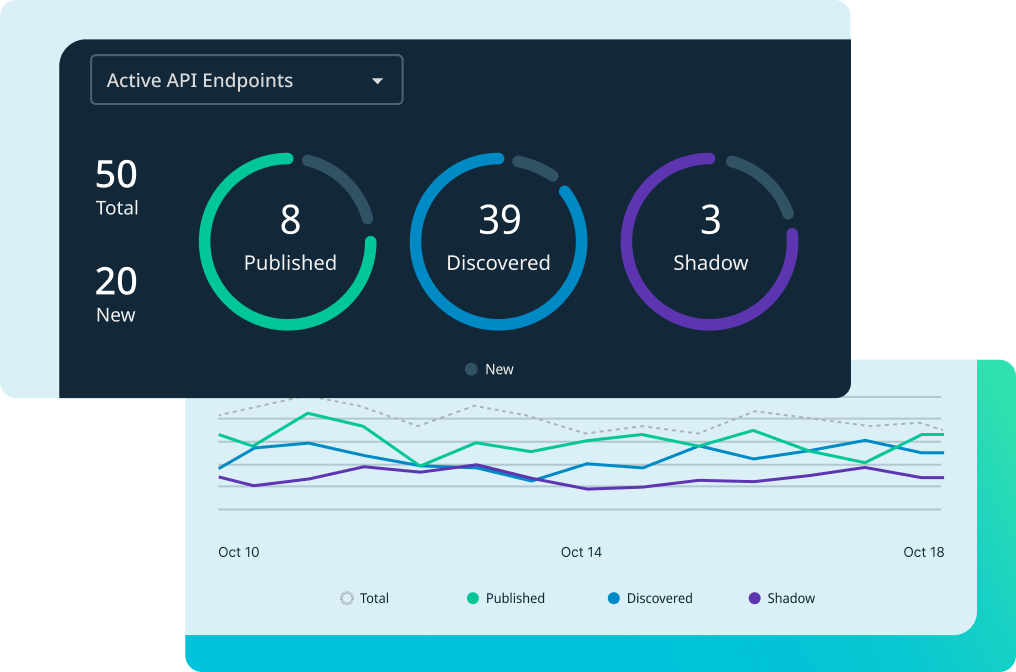
API Discovery & Inventory
Cequence discovers APIs throughout the network and creates an inventory including automatically creating API specs if they don’t currently exist. This provides visibility and understanding of the API behavior necessary to detect malicious activity. Complete inventory is the precondition for finding a BOLA vulnerability in an endpoint nobody documented.
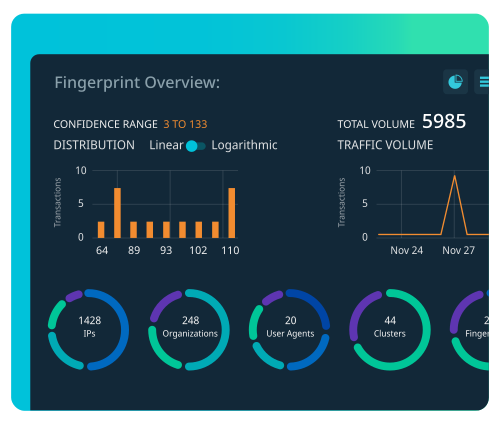
Behavioral Fingerprinting (ML)
Cequence creates fingerprints of API transactions based on combinations of characteristics including the tools being used, infrastructure, and credentials and uses ML to analyze behavior and accurately identify malicious behavior. This approach enables the detection of both high-volume and low-and-slow attacks and enables the solution to track attacks even as they evolve to avoid detection. It is what allows Cequence to surface BOLA vulnerability probing hidden inside authenticated, well-formed API traffic.

Sensitive Data Exposure
BOLA attacks can unintentionally expose sensitive data. Cequence identifies predefined expressions in API payloads (e.g., credit card numbers, SSNs) and custom regular expressions can be created to identify business-specific values.

Account Takeover (ATO)
ATOs are ripe for automation and commonly executed by malicious bots. Cequence detects enumeration & credential abuse; stopping BOLA paths that lead to ATO, which could result in financial fraud, data theft, or privilege escalation.

Business Logic Abuse
Business Logic Abuse appears as valid interactions, going undetected by traditional security solutions, leading to data loss, theft, or fraud. Cequence detects transaction anomalies and identifies business logic attacks based on intent and blocks the attacks in real time.

Cequence Security application and API protection experts will show you how we can help you improve your security posture with a personalized demo. Nothing to deploy. All we need is your email.